Flora & Fauna (sans Merriweather)

For those who are interested in the local Egyptian flora and fauna, I know nothing. I know donkeys, feral cats, feral dogs, and camels (though I’m still waiting to kiss the latter). I have remarked several times that I’m surprised at the lack of animal-life. Even when we’ve taken forays into the desert, planned or unplanned, I have not seen anything. Now, I’m sure if I got out of the car and explored a bit, I might find some lizards or scorpions. I have heard of a bat cave fairly close by and will definitely check it out, but with the high rate of rabies in Egypt it’s strongly advised (and we follow it to the letter) to not interact with any stray dogs or cats, which also means no bat-kissing.

There are lots of birds here, but I’m going to have to get a guidebook to determine who and what they are as well.

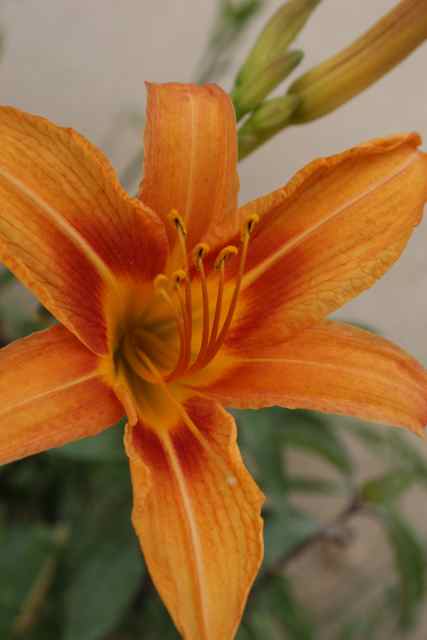
Having said that, there are some beautiful flowers, bushes and trees here (again, I don’t know the names yet). At Ain Sukhna, in particular, there were gorgeous tropical flowers everywhere. For Mom, Tanya, Lori, Mary, Robin W. and Teresa, who I know love flowers, here are some pictures:

Are we still in Egypt?

It’s not as if my life isn’t surreal enough right now, but finding myself staring out at the clear bright blue water of the Gulf of Suez which feeds into the Red Sea, with silky sand beneath my feet, while a cool breeze blew and a young waiter asked if he could bring me anything, I felt as if I’d leapt into another yet another dimension of surreality.

This past weekend we went with some friends to Ain Sukhna, and stayed at the Stella Di Mare resort. The resort was beautiful (see photos of the lobby areas, beach, pool, etc.). We did find though, that almost all of the rooms had two twin beds. We paid a little bakshish (tip) to have our beds moved next to each other. It was our first attempt at sleeping in twin beds pushed together, and essentially resulted in us staying as far away from each other and the growing crack between the beds. But regardless, our room was nice, with a balcony overlooking the back of the resort, and our front door opening out to a view of the pool.

So our weekend was spent relaxing between the huge resort pool, complete with waterfall, (which was particularly beautiful at night) and the Gulf of Suez beach. The beach was very shallow and we did walk out quite a distance before the clear water (with only a few small fish, thank goodness – still working on my fish-phobias) reached our waist. It was actually a little too cold to do a lot of swimming, so we relaxed on the beach on our cushioned lounge chairs and read and people-watched.

One sight that made me smile was a group of four people sitting on the beach under a shade tent – two men with two women in full abayas – it’s obvious that clothing encumberments don’t deter those who enjoy the beach. In terms of swimwear it truly ran the gamut – from some string bikinis, to full abayas, to spandex-like full-covering bodysuits. Regardless, for those who wanted to partake of the water, they did so. I just think that it would be mildly uncomfortable to be fully dressed (arms and legs covered), covered with a floor-length “dress,” all soaking wet. But that’s their choice and I was glad to see that they didn’t let it interfere with their enjoyment of the beach.

Periodically we peeled ourselves up from our cushioned loungers for one of the most amazing buffets I’ve ever seen. Breakfast and dinner buffets were included in the room price, and each one was vast but varied from the last one. Dinners had pasta bars, pizza bars, all varieties of meats (if you so chose, blech), several varieties of humus, tabbouleh, tahini, fresh vegetables (oh, can I mention here that there is something magical and delightful about Egyptian cucumbers – they’re delicate and tasty and by far the best I’ve ever had – close to English cukes, but even better), rice dishes, Chinese noodles, and an entire table laden with all types of bread. The dessert table was a feast for all the senses as well, transporting you into a Wonka-like experience. By the second day I had to actively remind myself that despite it being a buffet, that did not mean I had to eat until I was in pain and couldn’t bend. There is something about feeling the need to “get your fill” at a buffet – truly dangerous.

I was able to try my first dish of fuul here – a traditional Egyptian breakfast dish made of fava beans. I can’t say it looks appealing, rather like a pile of brown mush, but I watched a few people “concoct” theirs so I copied them and added a drizzle of olive oil, fresh lemon juice, sea salt, thyme and some slightly spicy spice. You eat it with bread and it was delicious! As a vegan/vegetarian I have to say that breakfast eaten out is typically just varying forms of bread-stuffs, so it was wonderful to have some tasty protein to start the day with, along with all the fresh fruit they offer (also tried a fresh date for the first time – slightly plastic-y exterior, but not bad).

Our first evening Ron and I walked down to the beach, where we were alone except for an exuberant group of Egyptians down the way. We sat in beach chairs looking out over the Gulf of Suez towards the Sinai Peninsula and Israel, Jordan and Saudi Arabia beyond that. And for the first time since arriving in Egypt we saw the stars and for a while a very clear picture of the Milky Way. I had to remind myself that I was just a little girl, raised in Ohio, staring at an area of the world I never dreamed of seeing. At one point I said to Ron, “Thank you for marrying me.” He replied, “Thank you for marrying me.” We sat there for quite a while in our happy silence.

The second night, the group of us took the one child amongst us, Carly who’s a very precocious and delightful 6-year-old, to the “Baby Disco” event after dinner. I think it was really called something else, but Ron dubbed it “Baby Disco” and it stuck. We had thought it was going to be a musical-chairs-type game, with disco ball and strobe light, and Ron was plotting all through dinner how he’d shove out the competition – namely by taking up two chairs at once. He was a tad disappointed to find out that the musical chairs were replaced with a string of Hokey-Pokey-type interactive songs, including Y-M-C-A. It was actually quite entertaining to watch all the kids, from about two to ten, following along. After this we decided to go see the free “Fire Show” which turned out to be a poorly-choreographed, horribly-Dj’d, show, with sterno cans holding up sticks covered in kerosene-soaked rags around the stage. In all fairness, there were two “acts” that were exceptional, but the remaining several were a study in patience. Plus, the kerosene was giving off clouds of thick black smoke, at times completely obscuring the performers. But again, we were in an outdoor amphitheater, in Egypt on the beach, with the stars above us (somewhere behind the throat-choking kerosene haze). Can’t complain.

To Ron’s growing concern, the resort far exceeded my expectations and continued to raise them. I told him that if he were smart, he would not be continually taking me to posh resorts, cities with jewelry shops on every corner, where a manicurist will come to your house and it’s fully possible to hire a housekeeper, nanny and personal chef, all the while not requiring me to work. Unfortunately, he has set the bar high, poor thing. Overall we both absolutely loved Ain Sukhna and the fact that it’s only an hour-and-a-half from Cairo leads me to believe that we’ll be back – hopefully often.

Vacation, sandstorms and a bread bicycle

It’s a tad embarrassing, but we’re going on vacation… already. Actually some friends booked a room at a resort on the Red Sea for this weekend and asked if we wanted to join them, so we said sure. It’s a resort in Ain Sukhna, only two hours from Cairo. According to good ole wikipedia:

Ain Sukhna, the Arabic for "hot spring", was named after the nearby sulfur springs. The springs originate at Gebel Ataka, the northern most mountain in the Eastern Desert. Close enough to Cairo for a day-trip, this popular weekend resort has fine beaches, coral reefs, and water sports. It is located about 55 kilometers (34 miles) south of Suez, and is the nearest bathing resort to Cairo. Some hotels in Ain Sukhna are the best on the Red Sea.

From the websites on Ain Sukhna and the resort itself, it looks amazing! I’ll wait to tell you all about it, until we’ve actually been there though. Not that advertising is ever false or misleading…

So, without entirely realizing it, I experienced my first sandstorm (pr. khamseen) the other day. It was around 2:00 in the afternoon and I noticed that the daylight was a strange color. It was almost yellow. I looked out the windows (our windows are really sliding glass doors everywhere) and between the two buildings across the way. I could see through to the far street and there was this layer of… well, it looked like smog or something in the air.

That night, our assigned sponsor and his wife took us out to dinner and asked if we’d seen the sandstorm that day. I was delighted to have actually noticed it, despite not knowing what I was noticing (apparently khamseens are typically caused by wind coming in off the Sahara in Spring, between March and May). Our sponsors took us to one of their favorite restaurants on the Nile, within walking distance from our place, called, of all things, The Fish Market. Despite the name, they had great vegetarian options, of salad, baba ganough, hummus, tahini, roasted eggplants, and great fresh-baked bread (pr. ‘aish), and we got to watch the sun set over the Nile (I can't imagine ever getting tired of seeing that).

The bread in Egypt is very important. As I’m sure many of you have heard, the vast majority of the nation’s poor here rely heavily on subsidized bread from the government and there has been a shortage due to the rapidly rising cost of wheat worldwide. As a result, the government has now ordered the Army and Ministry of Interior bakeries to bake subsidized bread in hopes of reducing this shortage. I haven’t seen any “bread riots,” nor has anyone else here whom I’ve asked, however we realize that we’re not in areas of the city that are strongly affected by this.

Bread here seems to be everywhere, and I mean everywhere. I’ve seen piles of these puffed bread “pillows”, sometimes called shammy (they’re like pita bread, or pocket bread, but sold or served puffed up with air, not flat), piled on a sheet for sale on the street corner – like used books in NY. I’ve also seen, and am determined to photograph it next time, a “bread bike” – which is a guy riding a bicycle through Cairo traffic, holding a pallet of wood on his head piled high with these bread “pillows.” It’s truly astonishing. I’ve seen a lot of things carried on the head here, mostly packages, bags, etc. One of those things that jars you into remembering you're not in Kansas (or DC) anymore.

Other sights I’ve been witness to that have either left me speechless or made me gape in astonishment with a little gurgle stuck in my throat include the propane donkeys, as I’ve mentioned before. These are donkey carts that are casually lead through Cairo traffic loaded high (everything here is loaded high) with canisters of propane by the dealers selling to businesses. We passed one in Zamalek on our walking tour. As he walked down the street calling out to the businesses, I swear he was singing a “Come buy my propane” song. They obviously don’t have specific delivery routes. It’s more like a US ice cream truck, but without the pedophile and tinkly music (or so I assume).

There’s a rattan chair maker that I’ve seen a few times as we’ve driven into downtown. I am determined to capture him on film (or in digital pixels, if you’re being picky). He has a little shop on the main road, one of many wedged in beside each other, and this guy sits out on the sidewalk in front of his store weaving together huge rattan chairs (like what you’d see in Pier One). It’s phenomenal to watch. It’s something I’d like to film, and then speed up and watch him create an entire high-backed chair from a pile of reeds in seconds.

These stores are all in a line, like books (pr. kitaab) on a bookcase, with no order or reason to their placement. Next to the chair-maker you’ll have a juice bar where oranges and lemons hang in large sacks from the ceiling and are stacked up in perfect pyramids (fresh juice here is very popular – I’ve tried the strawberry (amazing!) and a hibiscus/blackberry iced smoothie that I continue to dream about). Then next to the oranges will be a store selling chains. Not the Guido-type of chains, I mean large gnarly metal chains, hanging down like a horrific version of a 70’s beaded curtain for an S&M store; with links bigger than your foot. Took me a while, but I think they’re used for trucks and stuff… at least that’s what I’m saying until I see proof otherwise.

The pyramids have been spotted and we continue to get lost

We went to dinner last weekend at a friend’s home in Mohandiseen, an area of downtown Cairo. This is one of the neighborhoods that we were considering, and there was a four-bedroom apartment available for us, but we opted for Zamalek. After seeing her apartment though (in particular, the bathrooms), I asked Ron if we should re-consider.

The apartment was on the ninth floor, with windows more than half way around the living/dining area, great light, 3-4 bedrooms, huge wall-length built-in closet-wardrobes, and multiple beautiful bathrooms that made me drool a little (let’s be honest, a bathroom can “sell/kill” a place, right?). Oh, and it had a “pyramid view.” Now, the view was only attained after standing on her balcony, leaning out over the street below and peering through the highrises to see two hazy bumps on the horizon they were claiming were the tops of the pyramids … apparently I have now seen the ancient pyramids of Giza. I do hope to get a slightly closer look at some point.

I know I have yet to post anything in-depth about the driving here, but that’s because any outing in a car results in more tales to share, but I’ll try to get the first one posted soon (and I’m sure driving tales will continue infinitum). But as I may have mentioned, the office loaned Ron the “office car,” which is a gargantuan white Chevy Suburban. The best thing about this car is that it’s ridiculously large and has diplomatic plates on it. It’s truly the only time I’ve seen way-ward pedestrians or self-absorbed drivers get out of the way. Ron’s doing a great job driving, and people say it’s good to get used to driving in “the beast” so when you get your car, which invariably is smaller regardless of what you own, you feel like you’re in a sportscar. We have taken a few trips in it and consistently have gotten lost coming or going each time. But in doing so, we see more of Cairo, and expand our experiences, right?

This last outing was this past weekend. We decided to head to one of the local malls, yes they have malls here, called City Center. Its anchor store is Carrefour Hypermarket, which is essentially a French Wal-Mart (whee, oui, oui). We were given basic directions to head to the commissary, but after the guard post and before the mosque, turn left into the desert. Um, okay. And head through the desert on a road (… with no name… ☺) that will appear to disappear at times, but you should be able to find it again.

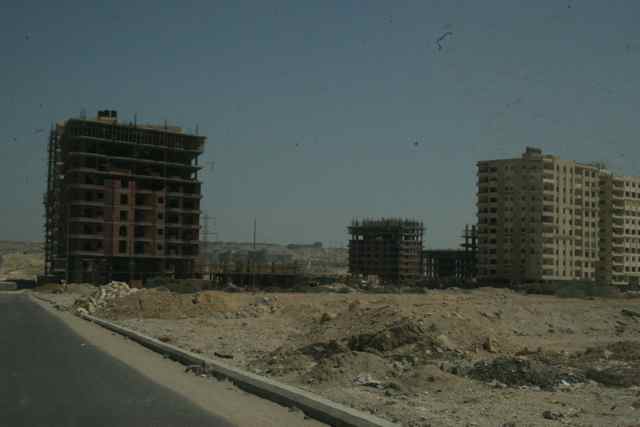
They were right. The road starts off normal, albeit with some gaping potholes and piles of rocks (which is normal for here) and we headed out into the desert toward masses of half-finished highrise buildings. We wound around these, stopping once to ask a taxi coming the other way if we were headed in the right direction. He said yes, (pr. “aye-wa”), and to keep going, turn left, right, left, etc. Yeah, right. But we did, passing some packs of feral dogs along the way, women washing clothes from a spigot near the construction site, and children playing among the bricks and sand.

Suddenly, on the horizon, sprouted a mall. Oh, glory of glories! And there was the parking garage that we had been advised to park on the second floor of (which was always empty as people were too busy fighting for spots on the first floor). And as it came closer, our excitement built, and then our concentration zeroed in on our need to find the entrance to the parking garage… and there it was… and there it went. We didn’t see how we could pass over the median to get to it, so we continued around thinking there must be another entrance. Well, there was, but it was for the Cairo “Ring Road,” which is essentially I-495 for those in DC. It’s a huge highway that circles Cairo. Without any other choice we merged with the masses and started to circle the city.

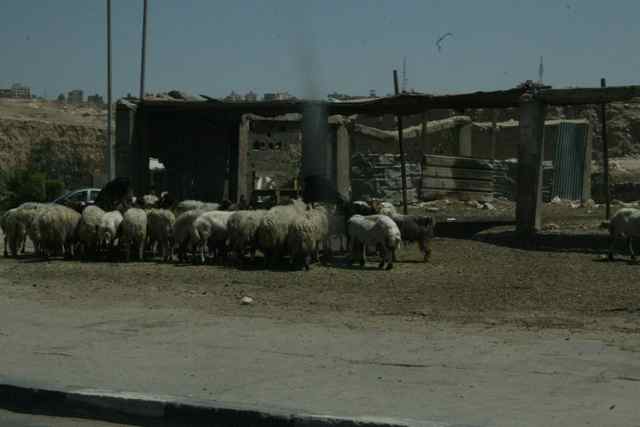
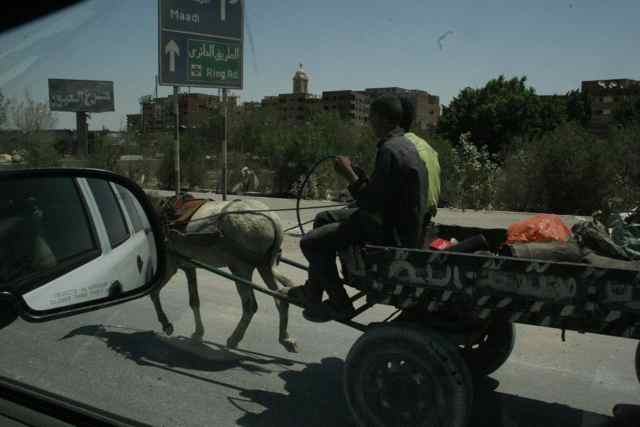
We continued to see lots of interesting things, gaggles of sheep (packs, hordes, families?) standing around as if they were waiting for a bus, car dealerships next to mosques, huge outdoor markets (pr. “sooks”) – photos were taken from a moving car, so forgive the quality – the inevitable donkey carts (poor things), and markets selling pearly pastel-colored toilets (need a big bag to carry those home). For whatever reason we continued to miss various turn-offs and u-turn options – I think we were in a bit of a visual-overload-haze – there was just so much going on all around.

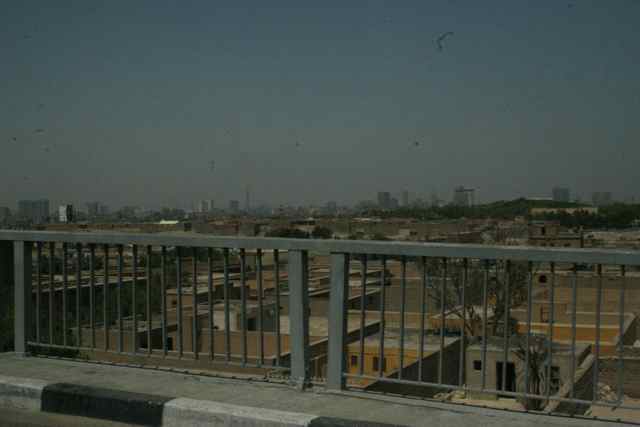
We also came upon Cairo’s City of the Dead. The story here, according to TourEgypt.net, is:

Previously, Cairo rulers chose [this] area for their tombs outside the crowded city in a deserted location. ‘This area was used as a burial ground for the Arab conquests, Fatimids, Abbasids, Ayyubids, Mamlukes, Ottomans, and many more,’ (said Malak Yakan, an anthropologist and tour guide). The historic belief in Egypt is that the cemeteries are an active part of the community and not exclusively for the dead. ‘Egyptians have not so much thought of cemeteries as a place of the dead, but rather a place where life begins.’ said Yakan. In modern times, because of Egypt’s housing crisis, a lack of satisfactory and affordable housing for a rapidly growing population, many poor Egyptians have made these rooms their permanent homes. These invaders have adapted the rooms to meet their needs. They have used the grave markers as desks, and shelves. They have hung strings between gravestones for their laundry to dry out… The cemeteries built in the City of the Dead are much different than the western idea of cemeteries. This is because traditionally, Egyptians buried their dead in room-like “burial sites” so they could live in them during the long mourning period of forty days…

And we came upon the Citadel. According to TourEgypt.net:

The Citadel is one of the world's greatest monuments to medieval warfare, as well as a highly visible landmark on Cairo's eastern skyline… The area where the Citadel is now located began it's life not as a great military base of operations, but as the "Dome of the Wind", a pavilion created in 810 by [Governor] Hatim Ibn Hartama… Between 1176 and 1183, Salah ad-Din (Saladin to Westerners 1171-1193 AD), an Abbasid Ruler, fortified the area to protect it against attacks by the Crusaders, and since then, it has never been without a military garrison. Originally it served as both a fortress and a royal city.

It obviously has a long and varied history and we’ll go back to tour it, but it was amazing to see as we drove by. We finally were able to turn around in a possibly-legal u-turn area, and headed back. We opted to nix the Carrefour attempt for the day, and instead head to the commissary. We drove around the ring road and saw signs for Maadi (one of the words I need to be able to recognize quickly in Arabic, as not all the signs have English). And then we didn’t. I love this place! Suddenly we knew we’d done something (else) wrong as we were now heading out of the city again, into more desert with large cement factories pumping away. Ron knew that the cement factories were outside of Maadi, so we did another u-turn, and headed back with fingers crossed. We do have a good map of Maadi and Cairo, but by this point we were off of it… and we need to obviously purchase one that extends farther as I’m sure our driving-getting-lost adventures will continue.

On the route back, we passed trucks carrying enormous blocks of limestone. They obviously mine it out here. Ron mused out loud if they were building another pyramid somewhere. When you look at the size and mass of these blocks, it gives you great pause to think of the pyramids being built over 4,500 years ago (they say they were constructed around 2570 BC), without the aid of flat-bed trucks, cranes, machines, etc. There are times when the ingenuity and determination of humans, for a GOOD cause, continues to impress me.

Two Weeks: “Do you believe it yet?”

Today, Monday, May 4, 2008, marks our two-week point in Cairo so far. Granted, we arrived at 9pm at night, but let’s not get too picky. As Ron said numerous times on the trip over here, and we keep remarking to each other periodically, “Do you believe it yet?”

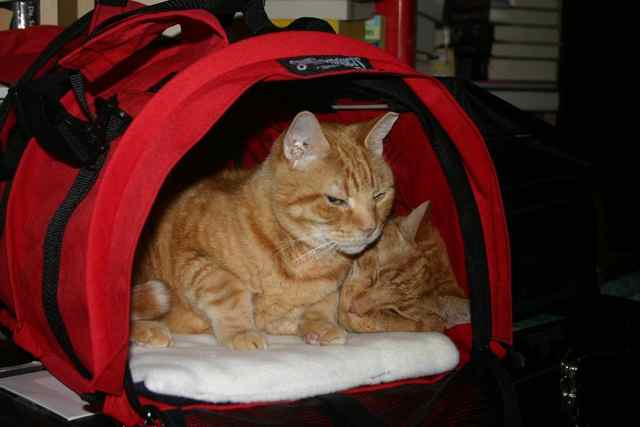
Sometimes I do, sometimes I don’t. For the most part it’s sinking in, slowly. It certainly helps the sinking-process when I’m sitting in Arabic classes, or walking down the street, driving past donkey carts, wandering through any store other than the commissary, looking at signs, menus, etc., or staring at the Nile. I can’t say it feels like “home” yet, but we are still in temporary housing, so I think once we get our stuff, and Clifford and Max from Ohio (as you can see from the photo, they’ve tested the carriers and are ready for the journey), life will feel more “real.” At least life within our “home.” It may take longer for life outside to feel like “home” but that will come in time.

I do find that I’m eagerly awaiting the arrival of our stuff. If everything goes as it should (which is often the qualifying phrase here), our first shipment will arrive in the next two weeks. This was full of mostly clothes, my cameras and lenses (except what I carried on the plane), we think all our DVDs (we can’t remember exactly where we put them), personal files, and some kitchen stuff. The remaining items should arrive about two months after the first shipment (bed, desk, couch, bookcases (though we really didn’t need these, I learned later), all kitchen-ware, bikes, books, etc.). Now, I did pack with the possibility in mind that we wouldn’t see either shipment for three months, as I’d heard that had happened to other people, but I’m hoping we’re one of the lucky ones… Our car should arrive in three months as well, as it’s coming by boat (chug, chug). It really is an amazing process, and we’re certainly aware of how lucky we are that we are allotted such a large shipment. There is a weight restriction, however, so depending on how much we acquire here, we may have to re-think what we bring back – computer books can be so heavy. ☺

As I mentioned, I started taking Arabic classes. I was lucky in that a week ago a new session started, so I was able to jump right in. I’m taking two classes, twice a week, Sunday and Tuesday mornings (five hours a week). They start at 8am, but I can’t really complain as all I have to do is get up and go down two flights. Hardly much of a commute. Though when I heard it started at 8am, I had that visceral undergrad reaction to an 8am class, but it’s really been fine. I have Colloquial Egyptian Arabic first, in which we’re learning basic greetings, conversations, etc. My name is… (Ismi Julia); Good morning, good morning (response)… (sabbaH ilxheer, sabbaH innuur); I live in… (ana sakna fi elMa’aadi). I’ll have you know that I just did all those from memory – I’m so impressed. ☺

After this class, in which I’m the only student, I come back upstairs, create my little flashcards, and then at 11am, return for my Modern Standard Arabic class. The reason for the break is that the teacher (ostazza Suheir) has a Colloquial II class between, which I am certainly not ready for. The MSA class has two students in it (I think it makes a huge difference for me having such small, or actually individual, classes – plus it’s the same teacher for both so things are consistent). In MSA we study standard Arabic, starting with the alphabet. Prior to these classes I’d look at the signs everywhere and just be boggled that anyone could see a word in amongst those beautiful fluid squiggles. However, after dutifully studying my letters (with my flash cards and a patient husband who’s willing to quiz me), I can actually pick out letters and sounds here and there.

There are technically only 28 official letters in the Arabic alphabet, however, as with all languages, there are “exceptions.” So there are an additional five “short vowel” symbols, which are dashes, circles or small squiggles, placed over or under the preceding consonant. And keep in mind that “preceding” is to the right, as it’s read from right to left – unless it’s numbers, as in license plates or prices, which are read left to right – got it? Clear as a Cairo sandstorm, I know. And finally (I think, though I’m only on class two), there are three additional symbols indicating double letters, or a slight catch in the voice (like a quick stop). No problem! Keep in mind that it’s been, well, decades, since I truly studied any language and that was German (in high school), Italian (in undergrad), and American Sign Language (for fun, ten years ago). And I never felt like any of it really stuck. Though I will say that it’s amazing what a 30+ year brain has wedged in its recesses. When I was first practicing my flashcards, and I’d come to a word such as “who” my brain would actually cycle through “wer” (German), “chi” (Italian), and the physical sign for who in ASL. This should be fun.

So like my sister-in-law Heather in Tokyo (who’s taking Japanese), nephew Max in Tokyo, and nephew Colin in New Jersey, I’m studying the alphabet. I was feeling fairly confident yesterday after learning my initial 28 letters, only to find out that these shapes I’d committed to memory, change, sometimes drastically, when they are attached to other letters – like in a word. Unlike English, which has printing and cursive, Arabic has only cursive. So letters attach themselves to each other all the time (bummer). So now I’m studying these new formations. I wonder if there’s an Egyptian Grover who can help me?

I am surprised at how much I’m enjoying my lessons and learning. My friend Perry, in Portugal, suggested that I start labeling things around the house as I learn their name in Arabic. Since she up and moved to a foreign country (Portugal, if you didn’t catch that) years ago and I remember receiving the sobbing calls in the first few months claiming that she’d never learn the language and feel like it was home, and then next time I saw her she had a hard time switching back to English, I figure she knows what she’s talking about. So our house has little pieces of paper taped everywhere. I’m just hoping they don’t get moved and I invert the word for book (kitaab) and table (tarabeeza) – though I don’t think it will cause an international incident. Egyptians are so friendly and helpful, they’d just laugh and correct me. Perry also suggested that I dive right in and start using what I’ve learned. Making mistakes is all part of the process. There’s something freeing about being in a place (city, country, continent – pick one) where no one knows you. Less pressure to be whom you think you should be.

I think we all (including Chuckles and Ricky, who routinely spend their days basking in their chairs in the sunroom like two old men on a porch), are very excited to be here and look forward to the adventures to come. As Ron keeps asking about everything from a walk down the street to dinner in a restaurant, “Is this bloggable?” And I happily reply, “Everything here is bloggable!”