Follow the Water Buffalo

One weekend we decided to take Mom to the pyramids at Saqqara and Dashur. So, we packed a lunch, grabbed our friend Ben, and the four of us set out on Saturday. Besides, you just can’t have more fun around Cairo than on a driving trip!

Living in Egypt and visiting the pyramids can be equivalent to living in D.C. and visiting the Air and Space Museum or living in Orlando and checking in on Mickey and gang every time you have houseguests. It can get a little tedious. I mean, let’s be honest, the pyramids are spectacular, however they haven’t changed a lot in the last 4,000+ years, and your first 15 photos of a pyramid, tend to look a lot like your next 15 photos, and the 15 after that (or, if you’re me and a photo-nut, make that 85 photos). So the question becomes, how do you keep a visit to a 4,000-year-old stone structure fresh and new? One way is to follow Mr. Frost’s advice and take the road less traveled (albeit shared with donkeys, delivery trucks, slews of water buffalo and the occasional camel) and take a venture out to the Saqqara and Dashur pyramids.

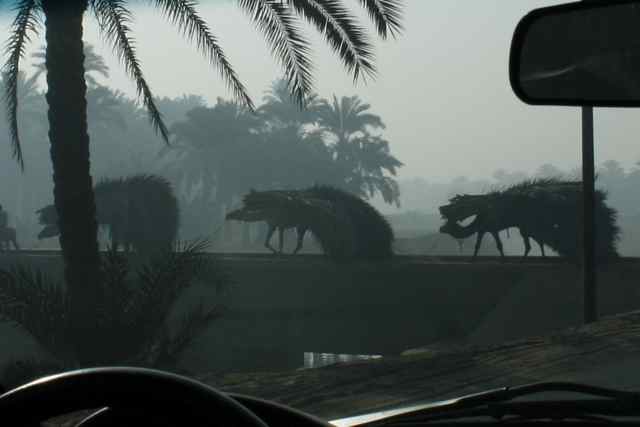
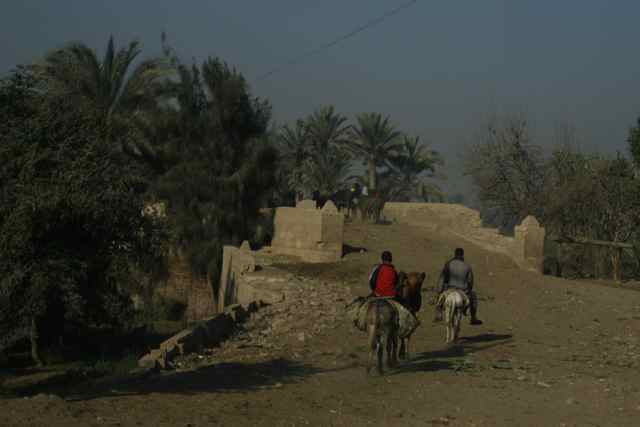
I cannot stress enough the importance of enjoying the “journey” here in Cairo. Whether we’re speaking metaphorically, or realistically, half of the fun of anythere here is merely getting there. So we took the Ring Road out and grabbed the “Sakkara” exit and started on our drive along the canal (one of many off-shoots from the Nile). Along the way we played versions of “Identify That” in the canal to pass the time (no identifiable bodies this time, though Mom was admittedly not looking for them). We also saw piles of burning trash, irrigation pumps pouring putrid water into the surrounding fields growing cabbages, cauliflower and such, small stands selling fruit and veg alongside the road (I do wonder who their primary clientele is), bunches of carpet factories and “schools”, huge trucks laden with bricks or sugar cane or swaying grasses, water buffalo seemingly out for a morning stroll and donkeys galore.


At one point we came upon two little boys, about 8-10 years old, driving along in a motorcycle-truck contraption. As we passed them, Ron rolled down the window and asked them if they had a license. They replied but I’m not sure what was said, but there were a lot of laughs.


We decided to hit Dashur first, which was farthest away, so we passed the sign for Saqqara (also spelled, Sakkara) and continued on as the road got a little more rural (meaning more carts and tractors, ambling water buffalo and low-flying shuttle busses, but on a 1½ lane road). At one intersection we saw a sign for “Seniphro Dahshour” off to the right. We knew to look for it as last time we flew past (it’s not necessarily designed to be helpful) and had to ask for directions.
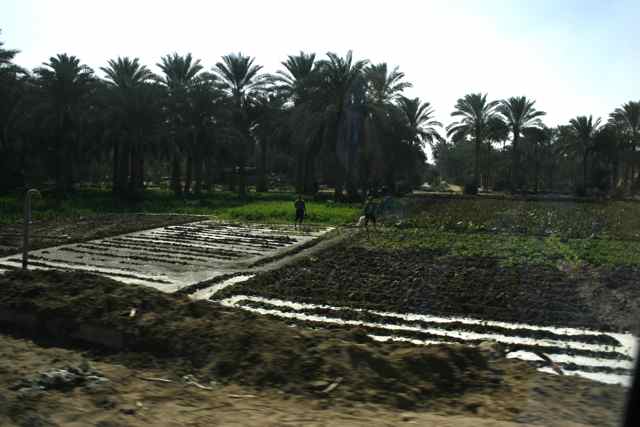
Along a road lined with palm trees, lush fields and slumbering sheep and goats, we came to the gate. Here we were approached by the guards and twice now we have been asked where we’re from and where we’re going afterwards. Our first visit we were kindly told, “You visit, then you leave.” Fair enough. This time Ron, having apparently eaten several helpings of Wheaties that morning, told the guards that we were next going to Saqqara, then off to Giza, then some shopping at CarreFour and maybe a jaunt to Alfa Market. Luckily they appreciated his sense of humor, didn’t shoot us, and we were allowed entry.

Dashur is a very different site than both Saqqara and Giza, mainly due to its remoteness. It’s also surrounded by an Egyptian military base, so while we didn’t have to deal with the din of other tourists, we were serenaded by the sounds of practice-time at the shooting range. But I’m sure it’s perfectly safe.

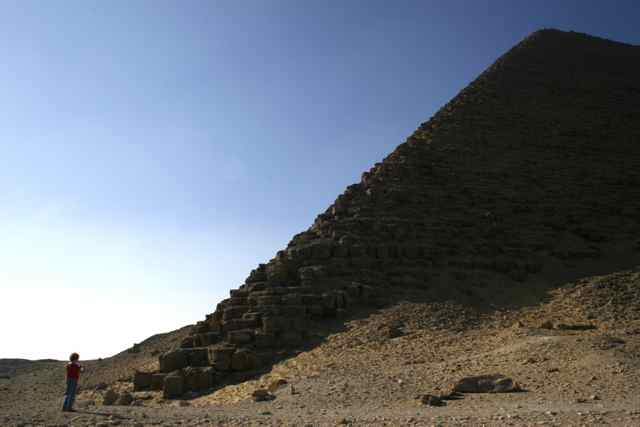
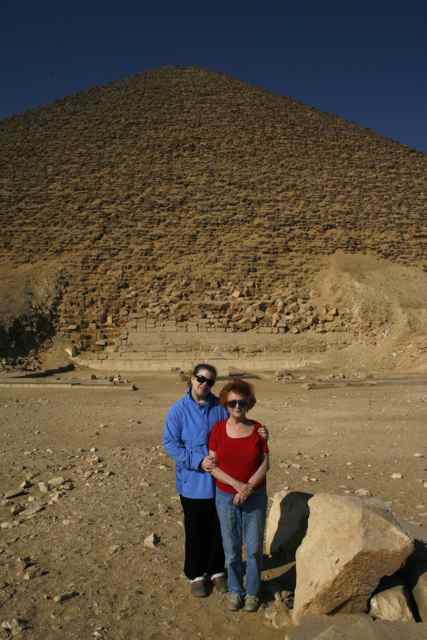
Dashur is made up of essentially three pyramids. The Red Pyramid, which you come to first, and the Bent Pyramid, which you drive a little farther to, were built by Sneferu, who reigned around 2613 BC and was the father of Khufu, who built the pyramids at Giza.


As happened the last time we were here, the ever-helpful police on camels tried to “guide” us around, but Ron was assertive enough to dissuade them (you definitely need to assert strongly your desire to explore alone). However we did take a moment to enjoy them stalking Ben, who had to make the same assertion. Luckily a few other tourists arrived, so the “guides” moved over to them.
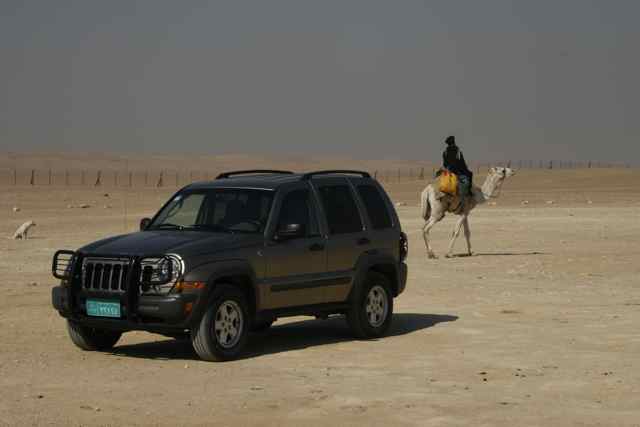


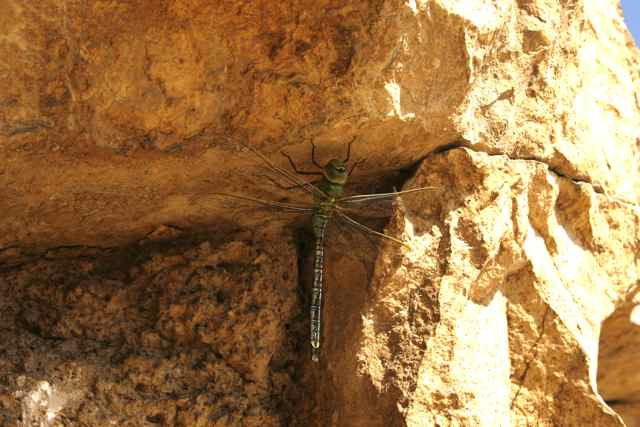
The Red Pyramid can be entered, however based on others’ claims of stuffy, claustrophobic conditions resulting in an empty chamber, we have opted to skip it. But we did thoroughly wander. Mom took to examining it up close and spotted a beautiful large dragonfly and finding such delight in seeing any wildlife in Cairo, I dutifully took the requisite 12 photos. Then Ron had another Wheaties-induced moment and insisted on us performing a Foxtrot in front of the pyramid, which Mom happily documented.

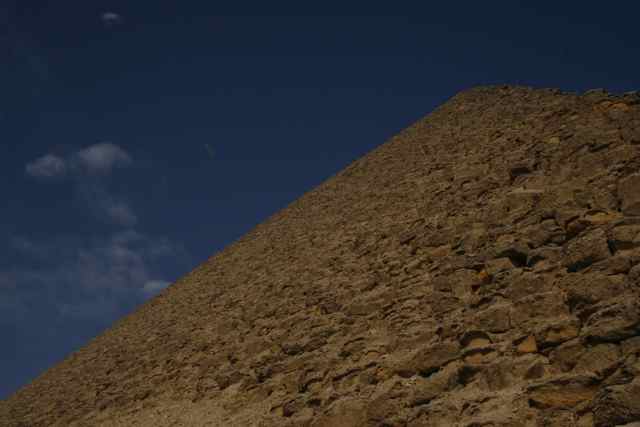
From here, we traveled over to the Bent Pyramid, which is reached by car on a bone-jarring, suspension-testing ride through the desert. The theories surrounding the change in angle half-way up the sides vary greatly, so suffice it to say, no one really knows why it’s “bent.” But due to its steep angle, much of the original limestone facing remains intact, which cannot be said for the others.


Mom found great glee in sifting through the loose rocks, finding smooth colorful ones that somehow made it into our car (and are currently nestled in our outdoor plant). We did have to stop her from performing her own excavations though.

The third pyramid in this grouping, the Black Pyramid, built around 1800 BC, is seen in the distance and appears to be a nubble on a rubble pile (not necessarily the guide-book description). We thought about testing the 4-wheel-drive capabilities of our Jeep and going to check it out, but figured it might result in a camel-police chase and despite the “bloggability” of that, we opted to just appreciate it from a distance. (The two dark specks in the photo below are actually Ron and Ben, I promise.)

From here, we took the canal road back towards Saqqara. One thing immediately apparent when you arrive at the gate here is the dramatic delineation between the green fertile fields of palm and the sudden stark desert. Plus the guards don’t try to run you off.

We stopped first to get a ticket for Mom, though in hindsight we didn’t need to. As “Dips” the rest of us get in free (whee!). Ron, feeling a Wheaties-surge again, tried to tell the ticket man that Mom was a very important person, and secretary to Hillary Clinton. The man didn’t buy it, so we bought a ticket. On arriving at the entrance to the Step Pyramid, a man approached us and asked for our tickets. We dutifully showed him our Dip cards but Mom had left her ticket in the car. He said that was fine, and then attempted to sell us a tour – he was a guide, not even a ticket taker!

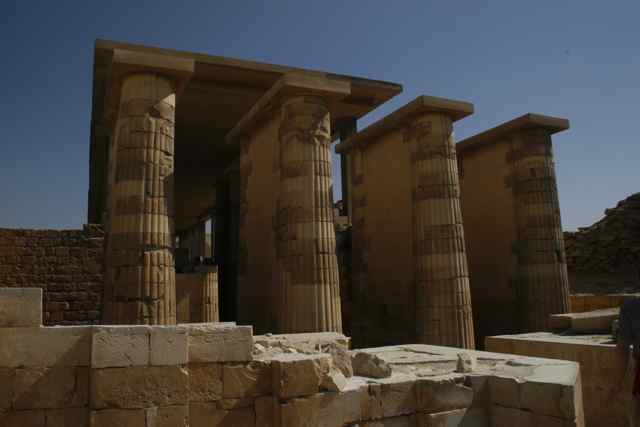
The complex at Saqqara covers four miles and is older than Giza (though it doesn’t have a view of a KFC, like at Giza) and its centerpiece, the Step Pyramid, is said to be the oldest known stone structure on Earth (a rather nice claim to fame). It was built for King Djoser, who reigned around 2635 BC, and was designed by Imhotep who was later deified and is believed to be the first engineer, physician and architect recorded in history.
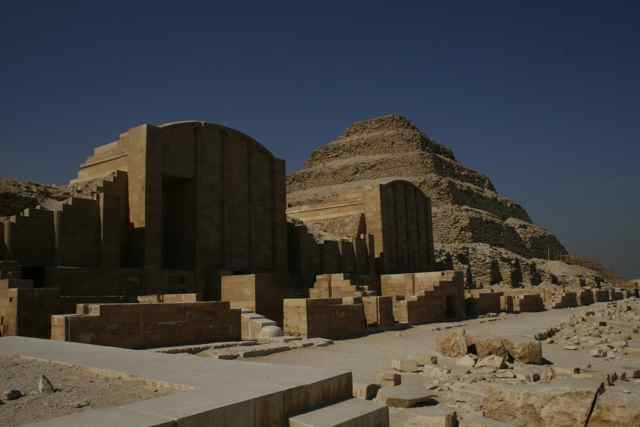


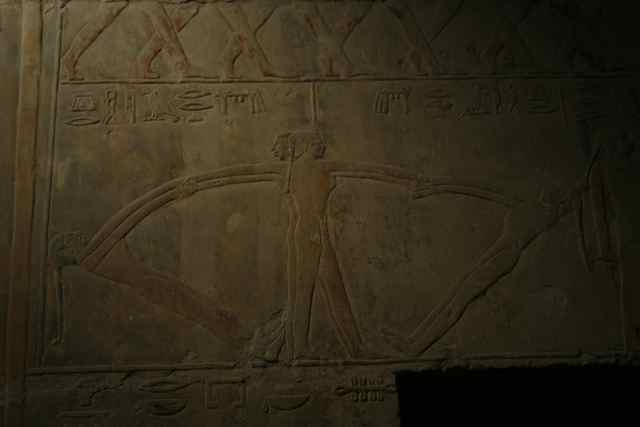
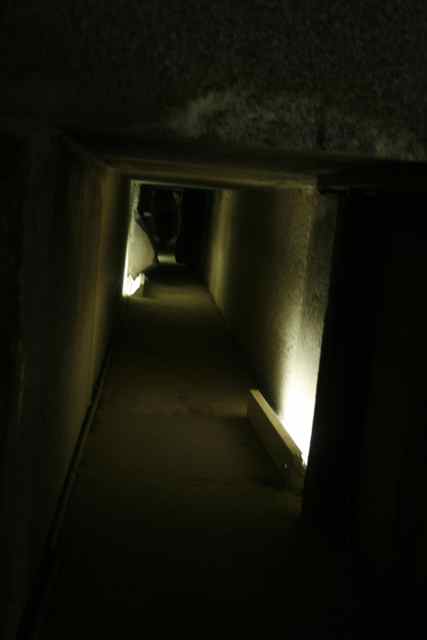
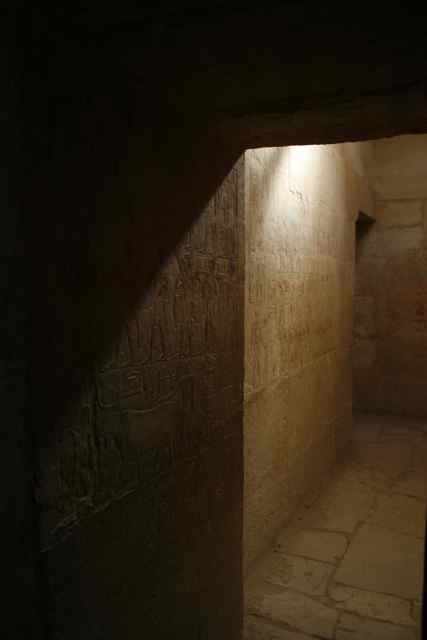
There are 16 pyramids in various forms of rubble, plus tombs and temples strewn throughout Saqqara. It has fantastic views and several interesting finds, including the Tomb of Teti (~2290 BC) which is one of only a few tombs that visitors can crawl into down a crouch-inducing tunnel that opens into three rooms with original hieroglyphs adorning the walls. Apparently Teti’s name is written using two half-circles and a feather-like icon, which can be seen all over. One room also houses an enormous basalt sarcophagus whose inhabitant could have gazed upwards at the stars adorning the ceiling. While it might not measure against our current feelings of “home,” it is astounding to find yourself standing exactly where others stood over 4,500 years ago. Then reality returned and we resumed the crouch position and crab-walked back up the tunnel to daylight.



We also explored the Tomb of Mereruka, who was Teti’s son-in-law, which has an impressive array of 33 rooms decorated in stone carvings, some from floor to ceiling, and many with their original colors.

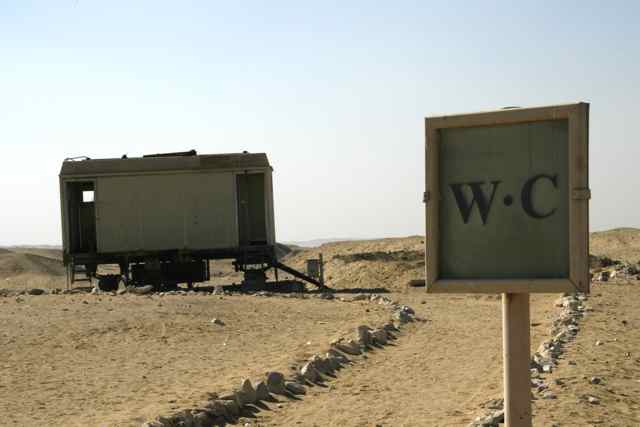
Opting to use the lavatories back at the entrance instead of these by the car park (not sure what vaccinations may be required), we drove back and also checked out the Imhotep Museum, newly opened in 2006 (thanks to the French). As museums go, and in particular Egyptian ones, this is a really well-displayed and well-labeled collection of artifacts from all over Saqqara.
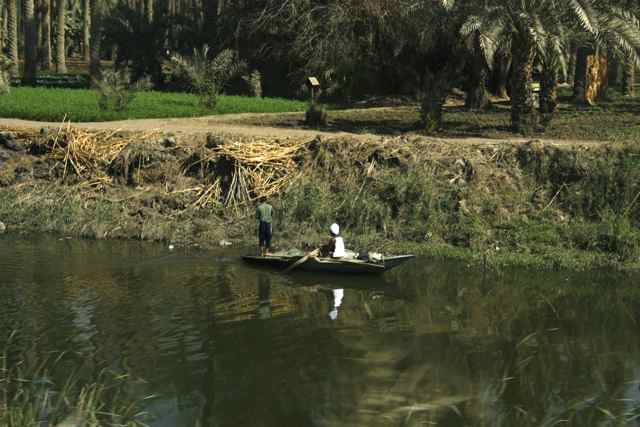
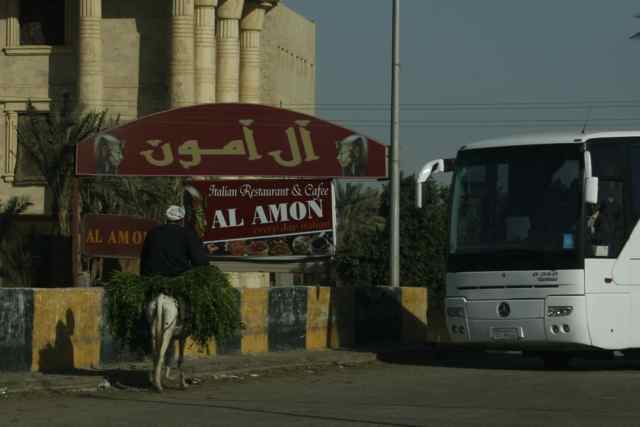
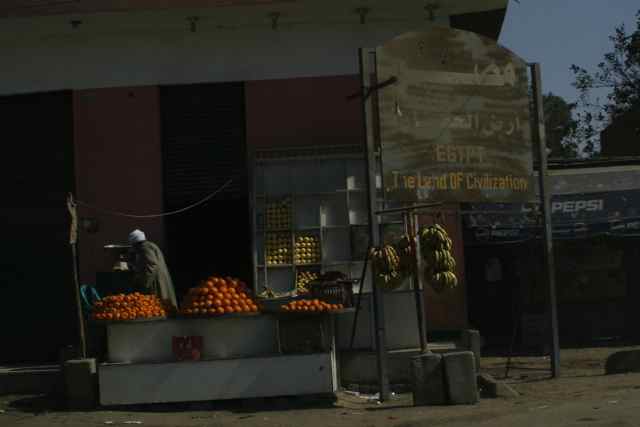
Last, but by far least, was the drive home; replete with physics-bending vehicles, adventurous fisherman on the canal, canal banks held up by trash, cabbages the size of Golden Retrievers and glimpses at true life outside of Cairo. Oh, and I guess I could mention the fruit seller who used an impromptu method for washing off his strawberries by spraying them with a mouthful of water. Ben promptly announced his refusal to ever buy local produce again, and as of two months later has remained true to his claim. Life in Cairo, where the adventure (and possibility of contracting TB) never ends.

Confessions of a Non-Herbologist

Under the “full disclosure” doctrine, and so people don’t accuse me of only revealing stories that make Ron look ridiculous, I will share a tale of my own stupidity and ignorance.

I recently received a package from my mother. I had forgotten my cell phone charger in Wales, so she took it home and mailed it back to me, along with some vitamins and other little things I couldn’t find in Cairo. In the box was a zip-lock baggie full of fresh green leaves. Considering the source, my mother the consummate cat-lady, I immediately thought it was catnip. (She had brought some dried catnip from her garden when she came over in February.) I handed it to Ron to dish out to the awaiting felines. He took some out, but sniffed it and said he didn’t think it was catnip and suggested it might be basil. Considering my never-ending search for basil, and failed attempt to keep the one basil plant I did find, alive, it was a logical conclusion. So I said okay, and put it in the kitchen without hesitation.

That night I attempted to make a pizza for dinner and thought I’d add some fresh chopped basil. So I picked some leaves, washed them, chopped and applied them liberally to the pizza. The pizza itself did not turn out well, as I was trying a new recipe, but Ron said it tasted okay despite its appearance.

A week later, as I kept forgetting to thank Mom and tell her how I attempted to give the cats basil for a treat, she asked me if the cats liked the catnip she sent.

“What?! You sent basil,” I said.

“It’s too early for basil,” she replied. “Besides, I don’t grow it. It was catnip.”

“Oh.”

Pausing as the reality that I had served my husband a catnip pizza sunk in, I started to laugh uncontrollably. I was finally able to confess to her what I had done. Her only comment, between the laughter, was, “Did it make him sleepy?” I debated whether to admit my failings to Ron, but finally couldn’t keep it in.

The funny part was as I was confessing what happened to Ron, and when I told him the basil Mom had sent wasn’t really basil, he got this really worried look and said, “Was it pot?” I won’t even guess why Ron thought my mother would be growing and shipping psychoactive drugs, but I quickly told him no, it was catnip. There was definite relief on his face, but then I told him that I had subsequently served him a catnip pizza. One of the many reasons I love this man, is that upon finding out what his (true) dip-wife had done, he laughed. And I then confirmed online that catnip is not harmful to adults and is even used to treat anxiety, migraines and stomach cramps. (Whew!) I will now be searching for a Dip Wife class on herbs, leaves and other green bits.

Shopping with My Mom the Movie Star

Over the next several days of Mom’s visit we accomplished a bunch of things, including a visit to the Egyptian Museum. I had arranged for a guide ahead of time so we could really appreciate what we were seeing – this museum truly has one of the most spectacular collections, and if you can decipher the pencil notations on post-it notes that are haphazardly placed around, you might get a glimpse of what you’re looking at, but going with a trained “Egyptologist” is also another route. We also did the requisite shopping and Mom was very good to Egypt’s GDP. She purchased a Khazakstani rug, some alabaster, some hand-blown glass ornaments, papyrus, t-shirts and scarves. And we dropped off a handful of jewelry to be repaired as Cairo is renouned for its gold and silver jewelers and the prices and skill-level are excellent.

As we were running the gauntlet in the Khan, I told Mom not to make eye-contact as that’s inevitably a sign that you will buy something in their shop and they will therefore latch on to you. Also, don’t bother saying, “No, thank you,” to everyone who tells you everything’s a dollar in his stall, or he has “just your size,” or all is free today. You’ll be there forever. It feels rude, but the best way to handle the pushiest of hawkers is to ignore them and often shove past them as they love to stand in your way. Every time I go I get to hear the latest turn of phrase, and with Mom I heard a new one as we rounded a corner and squeezed our way through a pack of idle men, one said to Mom, “I love your hair. You look like a movie star.” Good effort, but we still didn’t shop in his store.

We also took this opportunity to jump across the street to the less-touristy side and wind our way through the stalls to the spice store I’d bought from before. As I made my purchases amongst the local Egyptian women, again employing the, “Yes, of course I belong here” attitude, Mom felt it was worthy of a Kodak moment, and she captured the locals shopping around too. (Maybe that phrase should be “It was a gigabyte moment,” for the digital age?)


We had a few more dinners out, including one at Abu Tarek, a local spot that only serves koshary (the wonderful Egyptian dinner of pasta, rice, lentils, chickpeas, caramelized onions and tomato sauce). As we walked in it was obvious we were not locals, and we were quite possibly the only non-locals, and as we climbed the stairs, we were told each time to keep going up to the next floor, until finally on the third floor Ron refused and said this was fine and we chose a table amongst the local families. We’re not sure whether they put all the non-locals on the top floor for a reason, but our dinner was delicious, extremely filling and the three of us ate for around $10.

Unless you manage to visit Cairo and never take a taxi, it’s inevitable that you’ll have some exciting (read “ridiculous” or “terrifying”) trips. Our taxi to the koshary restaurant was the typical 40-year-old rattling black-and-white, but this one was lacking any substance to the back seat, so Mom and I were sitting in cloth-covered metal wells and being height-challenged Mom couldn’t even see out of the window. And one night we grabbed our friend Ben and the four of us headed to one of our favorite restaurants at Al Azhar Park. The taxi ride to the restaurant started with a first-time experience for us, we were cast out. For whatever reason, the first taxi we got in decided after a few minutes that he didn’t want our fare. He pulled over to the side of the road, said we’d have to get another cab as he didn’t know the way. Very strange, as most drivers who don’t know the way never actually admit it. But we got out, grabbed another taxi and managed to hit particulary horrible traffic; just dead-stopped. We considered giving up, but persevered and finally made it to the park. In the past we’d paid the taxi to wait for us through dinner, but we figured we’d just try grabbing a taxi on our way out as there is typically a line of them waiting. Following dinner, outside, overlooking the lights of the city and the Citadel on the hill, we managed to agree on a price with one of the taxis so we all crammed in. This driver was apparently going for a speed-record as he was flying so fast, whipping in and out of traffic that Mom had a true death-grip on my arm and I heard Ben muttering, “Maybe we can pray for traffic.” We made it home though, and in record time.

One night following dinner, we were walking around Zamalek and Ron suggested we go to a local pastry shop that he and Haitham had tried. Next to the pastry shop is a shisha bar, which is primarily for men to sit at small tables, drink tea and smoke shisha pipes. As we passed it, a waiter came out and said hi to Ron. He remembered Ron from the few times he and Haitham had come here (these establishments are typically not for women to partake in, and I’m fine with personally not experiencing the dingy smoke-filled man-odor-laden little caves). The waiter was telling Ron to come in, he’d get him a table, but Ron indicated that he was with me and Mom and told the guy we had an appointment. “A romantic appointment?” the waiter asked. “No, a family appointment,” Ron answered. “Go with God,” he was told. Not entirely sure what that exchange meant, but it’s probably best not to delve too deep. We continued on our mission, selected an assortment of little Egyptian desserts and shared them back at the apartment.

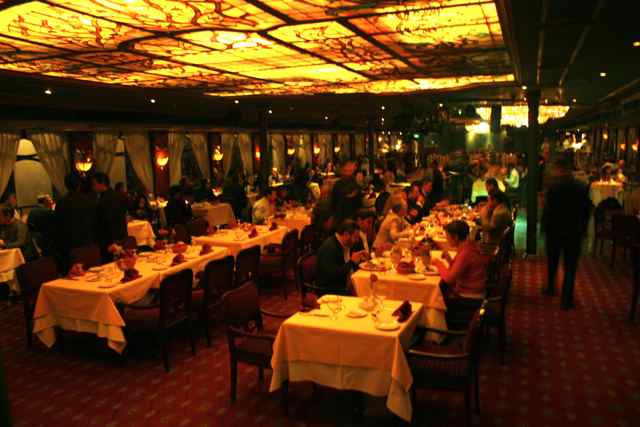
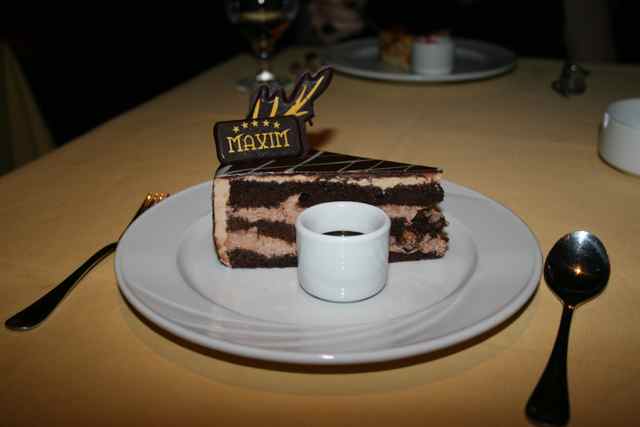
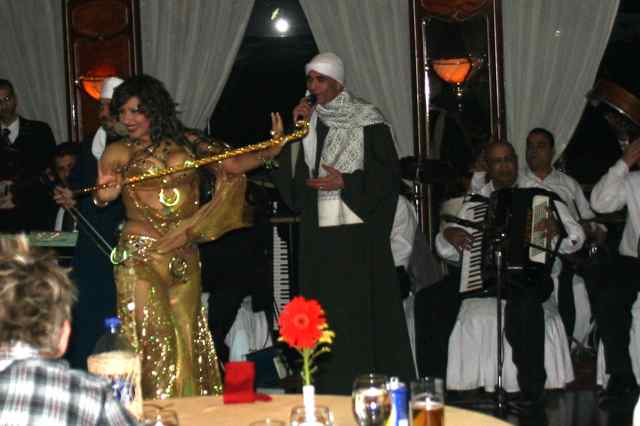
On another night, we thought it might be fun to do a dinner cruise with a bellydancer. The “Maxim” boat is docked in front of the Marriott Hotel on Zamalek, so we made reservations and headed over. The boat does actually float down the Nile, then back again, during which time you are served dinner and a very pretty dessert.


Throughout the meal you are serenaded by a variety of performers. We first had two women singing various hits from the 80s, which we all quite enjoyed. They were followed by the whirling dervish who was truly fantastic. I do doubt his authenticity though as his outfit lit up as he spun round and round, but it was really wonderful to watch. And finally there was the bellydancer. Mom and I missed her opening as we were out on the deck, but we returned in the middle of her show and I asked Ron how she was. He paused, looked slightly pained, and said, “She’s a bit like Albert. Kinda jerky.” Albert was the frenetic kitten we rescued who was quite a spaz. And as I watched the dancer I could see what Ron meant. She was more of a jumpy bouncing aerobic performer, than an actual bellydancer. I did find myself completely mesmerized by the sturdiness of her outfits though. Talk about a REAL miracle bra!


Day Three with Mom, a Real Excursion

Our third day we were finally successful in actually leaving the house for something other than dinner or mail. Two blocks from our house is the Ceramic Museum. We cannot get home without passing it, and yet prior to Haitham’s arrival I had never gone in. But after visiting with Haitham, I knew that Mom would appreciate it. I wrote the following article for the embassy newsletter about the museum. It’s a little dry, but that’s what you get with pottery (get it, a pottery joke? - the possibilities for frivolity are endless!):

*****
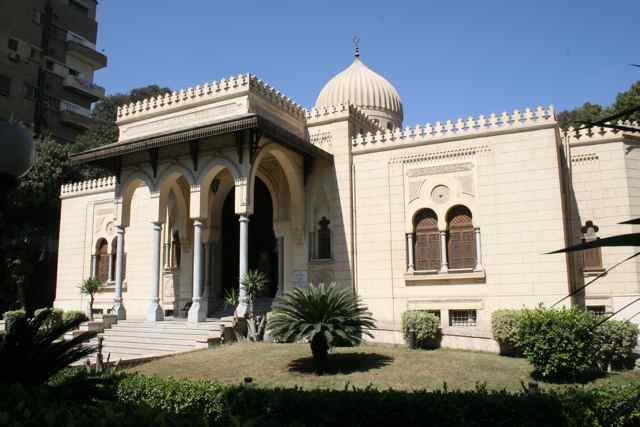
Cairo is a city brimming with more than 30 museums, the collections of which cover everything from agriculture, to military uniforms, and the history of the Egyptian post office. One lesser-known museum boasts ceramics from across the Islamic Empire, dating back to the 9th century, housed in a stunning 20th century palace.

The Museum of Islamic Ceramic Art (Gezira Art Center), located on Zamalek on Al-Gezira Street behind the Marriott, has a small but impressive and well-displayed ceramic collection that spans two floors and over a thousand years. There are more than 300 pieces and remarkable restoration has been done on many of the bowls, plates, pitchers and vases. This collection of Islamic ceramics is considered to be one of the best in the world.

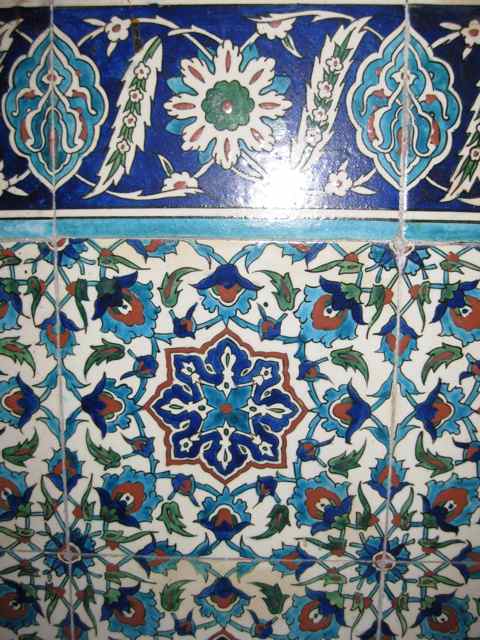
The wide variety and styles of ceramics displayed represent examples from all over the Islamic Empire, including Morocco, Iran, Iraq, Syria, Turkey and Egypt. They also show an interesting progression through Islamic history, starting with the Umayyads in 658 AD, the builders of Islam, who typically created pottery for utilitarian means. However, they were followed by the Abbasids in 750 AD, who were some of the first to import Chinese ceramics and thus changed the concept of pottery from purely practical to potential artwork. They often utilized a peacock-eye design, or repetitive dots and circles, and also created the luster process, in which pieces were fired a second time using a metallic oxide glaze that resulted in a shimmering metallic sheen. The designs of the Fatimids in 969 AD progressed to depict figural and animal styles, typically hares, lions and birds. Under the Ayyubids, in 1171 AD, who were primarily known for their woodwork and metalwork skills, the pottery designs became more intricate and delicate, and added new color variations. Mamluks (1249 AD) were influenced by an increase in Chinese imports, and their pieces reflect more Chinese animals and birds, as well as clouds and the lotus. The Ottoman designs, covering 1517-1919 AD, are some of the more recognizable ones (particularly to us novices), as they tend to utilize feathers, leaves and tulips or carnations, typically in blue, red and turquoise colors. The admiration for Chinese ceramics continued during this period and the influence and imitation can be seen in many of the patterns and styles of the pieces themselves.
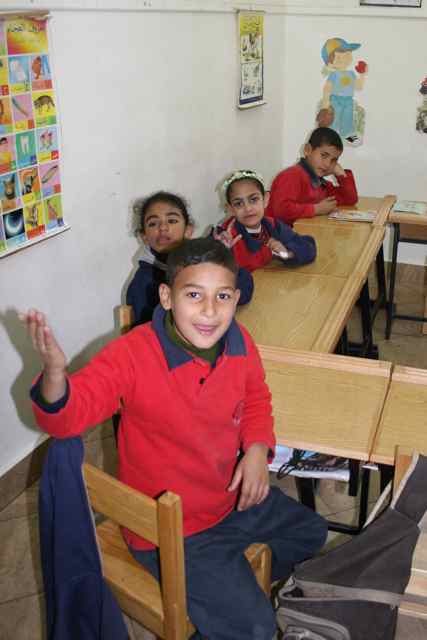
The building enclosing these works, the palace of Prince Amru Ibrahim, was built in the 1920s in a mix of Turkish, Moroccan and Andalusian design features, which, to the layman means it’s a really beautiful building. The interior walls are decorated with intricate stucco patterns from floor to ceiling, the floors are marble and wood inlay, there are towering tiled fireplaces in several rooms, mashrabiya windows enhance the exterior, a dome topped with brightly colored stained glass speckles the central room with dots of color and a surrounding garden is currently used to display modern sculptures. The building underwent significant restoration in the late 1990s and has held up impressively.

But, if thousand-year-old pottery doesn’t get you leaping out of bed, and architecture induces yawning fits, come for the temporary modern art collection in the basement, which can include paintings or sculptures made of rusted bolts or performance art video pieces involving a Barbie doll, or just come and enjoy the peace and quiet in a lesser-known Cairo museum.
********

Okay, so I know it was rather heavy on the facts, but I felt it wasn’t appropriate to add in such details as the fact that Haitham and I were admonished for taking photos and were only caught because his flash went off. And that as an employee of the Met in NYC and a purveyor of museums world-wide, it drove Haitham crazy that despite being in large enclosed plexiglass display cabinets, the pieces were covered in dust and fragments of broken lightblubs. We left with Haitham fuming and swearing to write a letter to the head of the museum to offer his observations (I think he calmed down eventually and said letter went unsent). But, as museums go in Cairo, and not comparing them to the Louvre or the Met, the Ceramic Museum is a really lovely collection and the building is well-worth the visit.